Showing posts with label lizard folk. Show all posts

Saturday, April 29, 2017

Unity RPG Q&A with Project Director Anson!

Q&A with the man behind the Unity Tabletop RPG


As you might know, last October I backed a Kickstarter to fund the development of a new tabletop role-playing game system called Unity being created by Zensara Studios.  As a writer and lover of high fantasy worlds, I asked the head of the project, Anson Tran, if he would like to answer some questions.  The following is the Q&A that follow, which was conducted via email.

Unity:  Four Factions.  One Destiny

Draconic Author:  So tell me about yourself. Who is Anson and what inspired you to create your own tabletop role-playing game?
Anson Tran: These questions are always hard. I’m a working professional in the IT industry who’s always had a love for stories and games. I was introduced to tabletop gaming a little over 13 years ago and I fell head over heels in love with it as a hobby because it combined my two favorite things when it comes to entertainment. Before tabletop gaming, I had been an avid fan of video games since I was a child. I was blown away by the freedom and openness that tabletop roleplaying afforded me while still giving me the same feelings I get as I sink my teeth into a good video game. Growing up, I always had this burning desire to create my own game but it was very daunting when the only medium I was familiar with were video games. I would ruminate a lot on game design ideas and it was a nice escape for me from the real world. This was done with the caution and understanding that I’ll probably never get to design a video game. Stepping into the tabletop gaming world blew the doors wide open on what was possible and made design and creation a very real thing – I feel the very act of GMing games acts like an educational institution for design.  Certain unfortunate life events (that might have been a blessing in disguise) coupled with my burning desire to create something and fulfill a dream I’ve had since I was a kid pushed me over that edge of “this would be a cool idea” to “oh my god I’m doing it!” I was afforded a small reprieve from work and I started creating Unity and testing it with my local groups of players. The feedback was positive and it spurred me to continue down the path that I am currently on.

DA:  That's a great feeling to have, and anytime I share my own work with people it encourages me work on it even more.  Now. I’ve been a fan of Dungeons & Dragons (D&D) and role-playing games (RPGs) since I first got Baldur’s Gate on the computer almost 16 years ago. Things have changed a lot since then, especially how people play. What was important for you to make part of your game that you enjoyed over years of gaming?
AT: Baldur’s Gate! Many, many a good hours were lost over that game and its sequel for me.  I think for me, gaming and how we game may have evolved significantly over the years but the feelings remain the same. It was important for me to understand those feelings and really drill down to get to the heart of them and what were the triggers that made them possible. I believe it’s subjective so I can only speak from my own experiences, but some of the best gaming moments I’ve had were shared with friends. There are some amazing single player experiences out there and I’m a huge fan of the single player experience, but for me, working together with a buddy or two to accomplish goals and sharing in the adventure as we reach those goals was paramount and the reason that I kept playing. When designing Unity, I focused a lot on teamwork, synergy, and gently prodding players into a dialogue with each other and rewarding them for it. Those were the most fulfilling moments for me when playing games over the years, video or tabletop. Something that ties in with this was also remembering the frustrating moments in my gaming career where there were barriers or obstacles that made it difficult to achieve those fulfilling moments I previously mentioned. It helps to keep me cognizant of designing rules that might impede the central concept of Unity.

DA: You mention in your Kickstarter Project video that your professional career makes you a good candidate to trust with completing your goals for Unity. What exactly do you do and how does it make your project one that Backers can take comfort knowing their money will be used as they intend: to complete the project and provide them with a product?
AT:  As mentioned earlier, I work within the IT industry and have held roles as a project manager and analyst. The stakes are higher in my industry as it’s focused on healthcare IT but the general challenges are the same when it comes to the majority of project work. Doing the Kickstarter and entering a new industry (tabletop gaming) has been an incredible learning experience and part of that has been translating the skills and knowledge from previous IT projects and finding a way to fit them to some of the more specific/unique challenges that have cropped up with designing a tabletop RPG.
Planning is so critical to project work and even more so when you are dealing with systems that save lives. Being immersed in the industry for 5+ years really drills this into your head and I’ve done my best to let this rigor spill over into everything I do for Unity. As it’s a new industry for me with its own unique challenges, I tried to install as many safety nets as possible to provide my backers with confidence that completion and delivery are inevitable conclusions. One of these would be the fact that I invested a large portion of the money, time, and effort upfront to have something substantial to show the world that I was dead serious about delivering a quality product. Another would be having contingencies – backup printers, backup artists, back up fulfillment etc.

DA:  If you could have included something into Unity that didn’t make the cut and wasn’t revealed as a stretch goal, what might it be?
AT:  I would have loved to include an additional bestiary, a separate supplement just filled with monsters and foes to fight.

DA:  You released your Kickstarter under Zensara Studios. Where does the name come from and who makes up the studio besides yourself?
AT:  I’ve always been a pretty spiritual person and that’s reflected in the name. Zensara came from Zen and the “sara” is from Samsara (which alludes to the infinite cycle of life and death). Zensara Studios is largely myself with my contractors for artwork and things that will take me far too long to learn (like animating videos). I have a business partner who is hands-off creatively but helped me get the company going initially. As the Core Rulebook nears completion, we’ll be looking to expand the company a bit by bringing in additional writers to help with the stretch goals.

DA:  How far do you see this project going? Dreams of a phone call from Hasbro/Wizards of the Coast? Paizo Publishing? How high is the ceiling for Zensara Studios?
AT:  Honestly Shane, if people are enjoying Unity and want more then I’d love to deliver more. One thing I’ve learned from this whole experience is that it can be a balancing act to make sure you don’t burn out on the thing that you love and you don’t slowly turn the thing that you love into a chore. Because I own all the creative aspects of my game, I’ve found the balancing act achievable and it sometimes makes me wonder if I could maintain this level of passion if I was making someone else’s game. Because of this, I haven’t really been spending my daydreaming hours thinking about a call from the big dogs.  Thought it would be better spent trying to see how I could fit more lizardmen into Unity because I know that makes certain people giddy.

Giddy is an understatement.  Have you seen my page banner?  


DA:  Just from your Kickstarter page, any veteran D&D player would recognize the page style used in your samples, but your book looks to be much more colorful than the standard D&D handbook. What considerations did you put into your design style? Do you think the benefit of having a full-color book outweighs the added costs of production?
AT:  Unity has been a passion project since the beginning. I knew I would probably lose money but I’ve been enamoured with the idea of a little guy like myself releasing a high quality product, not just content wise but production values as well. When you ask if I think the benefit of a full-colour book outweighs the added costs of production, the answer would be that it depends on the creator’s goals. My goal as mentioned just now, is just to have the kind of game book that I would be salivating for myself, that I would feel really good to hold in my hands and flip through, that I would be super excited to bring and show my friends and try to rope them into trying the game with me. In that sense, yeah it’s worth it.

DA:  I’m a huge fan of what Wizards/Hasbro did with the Fourth Edition of Dungeons & Dragons, especially coming from 3.5. Before 4th, melee characters were limited in most combat situations to just swinging their weapon, even with the horde of supplementary content, both official and home-brewed, while the casters had a plethora of effects and options. 4th gave everyone a ‘spell book’ of sorts to choose from, each with effects that could help allies and hinder enemies while adding flavor and appeal to combat.What was it about the Power Card system that you liked so much, and in what ways do you think you improved it?
AT:  The Power Card system gave me that video game feel and as an avid gamer all my life, it was incredibly comforting tucking into that when 4th first came out. It also spoke to video gamer sensibilities about ‘balance’ in that you didn’t have caster types having all the fun, and martial types had variety and depth beyond “I swing my sword.” as well. I’ve always been a huge proponent of every type of class having depth and variety. I felt pigeonholed into playing a caster in earlier editions of D&D and some other tabletop RPGs because they actually had a bunch of different things they could do (fun!) even though sometimes I really wanted to play a warrior type.
One thing that became apparent as we played 4th more that didn’t jive too well with my groups was that there were a lot of fiddly bits and coupled with an individual turn/initiative system for all units on the battlefield, combat began to feel incredibly long and tedious. I understand a lot of folks don’t mind this and embrace the long combats inherent to 4th but it wasn’t our cup of tea even though we loved the variety of powers and the tactical nuance that was afforded by them. I’m always loathe to say “we tried to make X better by…” because tabletop gaming is so largely subjective to individual tastes but for us streamlining the powers on top of a system that supported simultaneous turns made combat feel smoother and faster while still remaining a fulfilling and thrilling experience that rewarded smart and creative thinking.

DA:  We had our problems with combat taking forever too.  Fourth Edition also made role-playing feel secondary to combat. With so many combat choices, role-playing (in my experience playing) could feel stunted by confusing skill categories and ‘Skill Challenges’ which made the game more about ‘roll playing’ than role playing. That said, a good Game Master/Dungeon Master (GM/DM) can make any system better with effort. Did you have similar experiences? Was and is making role playing a key foundation in Unity as important as making players feel powerful?
AT:  Absolutely. Unity is this abomination child (said with all the love a father can muster) that has both parts roleplaying and gaming tweaked to the tastes of myself and the groups I play with. You have the combat and the powers that are rigidly defined with rules and conditions, and then you have something like Core Paths which are open, free-flowing, and a bit nebulous. I tried to make the game in a way where I could have my cake and eat it too. Roleplaying is hugely important to me and speaks to that side that loves hearing and telling stories. I like being taken on a rollercoaster of emotions and I’m always trying to find ways for players to buy tickets to that very ride. Things like Core Paths, Spark Points, and Failing Forward are my way of saying this isn’t just a game but also a story that you’re all writing together.

DA:  While reading through the Early Access Packet I saw an interesting side-bar titled “Shades of Grey” describing Unity as a game of heroes and cooperation. The most important aspect of an RPG is the role playing. While I always play some form of Good Sword-Wielder, I know people who love to play the villain who is out for himself and more than willing to leave the ‘meat shields’ behind. What made you point this out in your game? Why did you feel it necessary to tell players that the game isn’t meant to be played as an evil character? Could you have worded that differently?
AT:  I pointed it out specifically because I wanted to inform the reader in a nice way that I did not put a single thought into making the game support evil campaigns. In fact the name of the game itself is about cooperation and working together. I actually am unsure how Unity would play if someone decided to make an evil character. Could be a fun experiment. I also might have something tucked away in the corner of my mind about another game where you are encouraged to make evil characters.


DA:  Okay, last question for now.  The idea of Synergistic Combat Solutions (to paraphrase my favorite nonsensical Cards Against Humanity card) is one of the reasons I Backed this project. The scene in The Avengers when Captain America deflects Iron Man’s repulsor blasts around a corner is visually appealing, and to be able to create combos between players is a first in my tabletop experience. Sure, casting Magic Weapon on an ally's weapon is a neat buff, but throwing the barbarian over a wall so his ground slam attack inflicts more damage is usually something done at the DM’s discretion, not built into the rules. What gave you this idea, and what sort of crazy combos did you build into the game? Do you expect players to find new ways to synergize powers that may be ‘broken’ or overpowered? What (if any) is one that you didn’t add that sounded like a good idea in theory but didn’t work out when the rules were applied?
AT:  What you describe about throwing the barbarian over the wall so he can land with grand aplomb and send his foes scattering through the air while possibly caving in some ogre’s skull with his hammer from the force of his landing is pretty much what gave me the idea for this “Synergistic Combat Solutions” :P We found over the years, we were doing a lot of these GM discretion moments when we gamed and almost every time, it would be AWESOME. It made us look voraciously around for a game that had this built into the rules and supported it but we came up pretty short of what we envisioned.
There are a lot of combos that come to mind and many more still to be discovered. One thing that surprised me in a session was watching my players utilize a 3 person combo to land some significant damage on a monster. The Primalist class has an ability called Aspect of the Rhino that encourages the Primalist to move before they attack as every range band they cover adds a chunk of damage on top of their normal attack damage. The 3 players tried to create and cover as much distance as possible between the monster and the Primalist. The Dreadnought in the group used a power to swat the monster back a range band further and the Sentinel crouched down low with her shield braced to launch the Primalist another 2 extra range bands, who was charging across the battlefield with Aspect of the Rhino up. The resulting hit was massive and instantly killed the monster. Having players discover these combos is an incredible feeling.
I absolutely expect folks to discover some broken combos out there. The nature of this type of system creates many different possibilities. As you add more powers or more classes etc, things begin to multiply. But now that the Early Access Packet (EAP) is out and folks are playing, we’re getting a lot of good feedback and will hopefully catch some of these overpowered combos. With regards to your question about something that I wanted to add but didn’t, to be honest, I didn’t have this struggle BUT you might notice the Overdrive power Prismatic Shard for the Primalist in the Early Access Packet. It’s an idea that I’m fond of but I’m unsure if its execution and rule set are easily understood by the player/GM. I deliberately left it in there to see how folks with fresh eyes will utilize it (if they can) and I’m watching the feedback on that power closely. I’m hoping it makes sense and people see what I’m trying to do there but it could very well end up removed/replaced and that would be my answer to your question.

Thank you, Anson, for your time and for answering these questions for me.  I look forward to more meaty updates to test and possibly another -more punctually delivered- round of questions with you.  For those who want to learn more about the Unity RPG, please visit the links below.

Friday, March 11, 2016

Questions Authors Ask: How often would Lizard People Lay Eggs?

Or, "The Ovulation of Fictional Beings!"

Another fairly unscientific look at something only an author would bother thinking about

You know what most people don't ask themselves every day?  "What would it be like to be a sexually mature female lizardfolk?"  You know why?  Because... well... why would you?  "Because you're an author writing about anthropomorphized lizard/dragon people and when and how they ovulate is something that you want to know!"  Now why would you want- "Stop asking me questions and read the blog!"

My novel features lizardfolk, if you haven't noticed, so one thing I recently started wondering was how they reproduce.  It may not come up explicitly in my novel, but it affects the language you use when discuss their culture and life cycle.  Do you call an infant a baby or a hatchling?  Do you say," When you were born," or "When you hatched?"  Do they build a sort of nest?  Do they incubate?  These questions need to be answered as they impact how the characters go through life.

My answer was for them to come from eggs, and that was enough for me to answer what I needed to know.  Later on, however, I began researching how eggs are fertilized in order to understand what would be involved for harvesting eggs from a different chicken-like creature without them becoming fertilized.  That sent me down the mental rabbit hole of egg laying frequency in chickens, which made me realize that my lizard people might have a situation on their hands.  If you're an egg eating, child-rearing, sentient species, what would your people do if mature sexually-inactive females laid an infertile egg at semi regular intervals?


If you think about it, humans do this, if in a very different way.  Female menstruation is quite literally the human body passing an unused egg out of its system.  Now granted, humans don't lay eggs covered in a shell filled with nutrients for the potential fetus inside.  They pass a microscopic cell and an internal lining along with some blood.  Messy, inconvenient, and often painful due to cramps.  Birds and reptiles, however, can lay unfertilized eggs complete with shell and yolk, and a humanoid bird/lizard person might do the same.

Now, these creatures I'm thinking about are completely fictional, and the answers to these questions of how, why, when, and what are entirely up to me, their creator.  It could be said that there is no need for me to decide or go into detail about any of this especially when it may not come up directly in the story.  But knowing how this might work will proactively answer questions I would need to ask if my characters have children.  In my book's case, the answer to "what came first: the chicken or the egg?" is the chicken, but that just means I have to figure out the eggs before they show up in my story.

Friday, October 30, 2015

World Building, Part 5: History

World Building

Artificial Historical Artifacts

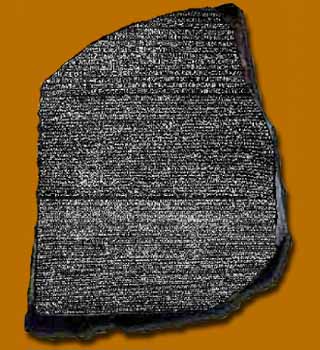
Ever heard of Excalibur?  Durandal?  Patton's Ivory-handled Pistols?  What about the Rosetta Stone?  The Liberty Bell?  The Magna Carta?  These are examples historical artifacts and ancient wonders that give backstory to our world.  History both tangible and lost that shaped culture and events; a few the stuff of legends.  Now while works of fiction are planned and constructed, as opposed to seemingly random chance, these things all influenced the world at some point, and the fact that some of these things are still present in modern culture shows how much wonder and awe they inspired.  


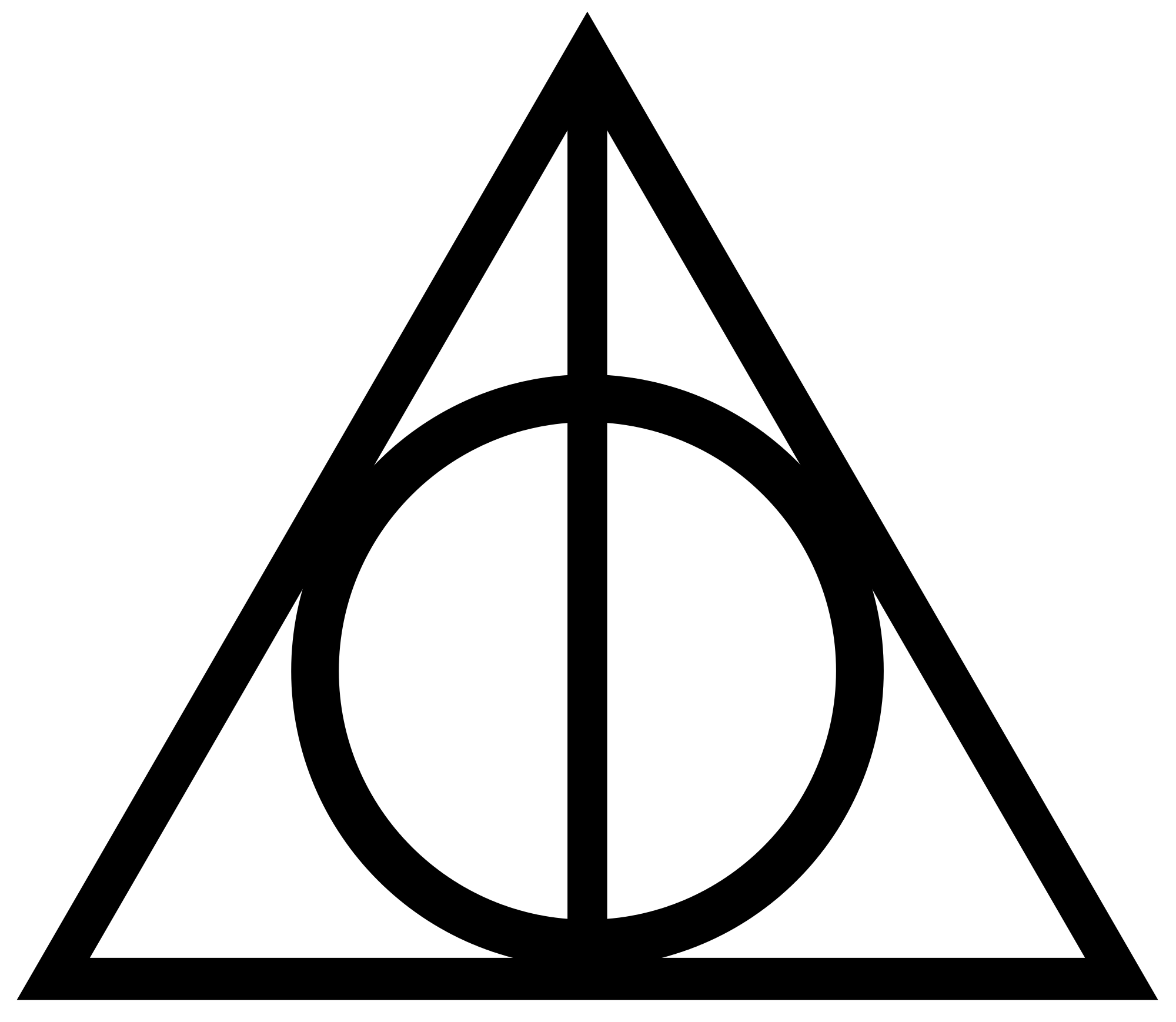
The same principle applies to fictional worlds.  Without backstory, without history, we are left without context for the events of the story.  What would "Harry Potter" be if Hogwarts was a brand new wizard school without the secrets and mysteries that fill the halls?  What if the Deathly Hallows didn't exist?  If the fear that still existed after Voldemort's defeat (the first time) was absent?  It would be a very meaningless story about a wizard whose parents never died, who never had to outsmart the most terrible wizard ever to exist, and the books would be about mundane concerns that really don't seem that compelling.  Imagine "The Lord of the Rings" without the Rings.  Why would Frodo leave the Shire?  To buy groceries?  Gandalf would be pretty bored, that's for sure.  And if Morgoth and Angmar and all the other things that gave the novel its scope were absent, why would we care about these diminutive hobbits?  My point is: everything I discussed this week relates to a world's history.  The races, the cultures, the language, the mythology, all make the history and are made by the history.  

The Symbol of the Deathly Hallows

In fantasy, artifacts tend to usually be the goal of a quest, or needed to defeat an evil power.  Sometimes they do things that no one can explain, and others do things no one has a use for.  For my book, artifacts were one of the first things I thought about when first creating the world, and considering my age at the time most of them were weapons.  This has a lot to do with the numerous 'artifact weapons,' such as Glamdring, Orcrist, and Narsil, that have histories going as far back as the first great wars of the worlds history (many thousands of years old in most cases).  The only other artifact I came up with in my original drafts was something I called "the Omnicron," a stone that had undetermined power.  It was the goal of both the Hero and the Big Bad to get it before the other in order to accomplish their respective goals (killing each other, basically).  But I found that initial idea too simple (and way too over used in the genre).  However, the idea was morphed into something else, and is still the focus of the plot, but its origins and its purpose changed.  So maybe only changed superficially, but my beta readers have enjoyed "the orbs" in my work.  From there, other artifacts begin to take shape.

The next most important artifacts for my story are a collection of "Hero Weapons" for my protagonists.  A common trope in video games, Hero Weapons are usually something special that a hero uses in battle, and one of the most famous in literature is Excalibur.  Not to be confused with the king-maker Sword in the Stone, Excalibur was a sword wielded by Arthur and made him unbeatable in battle (until someone inevitably betrays him).  For my heroes, we have a sword, staff, a special arrow (not a bow), and a pair of daggers.  Who gets them, you'll have to read the story.  But I will let you all know about the Sword next week.  You've seen it already, and I look forward to explaining the process of how Graey Erb and I worked together to design it.  

Have a great weekend and a safe Halloween!  Look forward to a review of Halo 5 over the weekend.  Best wishes!

Thursday, October 29, 2015

World Building, Part 4: Culture

World Building

A starting point for Culture

A bit of a continuation from yesterday's post

Last time I mentioned how including numerous cultures in a work can add depth and variety that makes improves the work (or it could detract from the work if done poorly).  To add to my world, one of the first decisions I made when I ultimately began the project was that it would start in a forested valley 'somewhere' beyond the borders of the more civilized parts of the world.  While the valley once was the center of an ancient civilization, wars between both mortal and immortal beings left the valley abandoned except by the few who felt it was their duty to remain and protect what had been left behind, while the rest moved on.

The people that still lived among the ruins are part of a culture I referred to as 'the Faithful' because they had chose to remain in and protect the cities of their ancestors, while 'the Exiles' were the ones who moved on from the Valley and chose not to cling tightly to their past in order to accept a new future.  A third culture, that I refer to as 'the Forsaken,' were on the wrong side of the aforementioned wars, and were driven away by the victors.  The latter two cultures I will not be discussing this time, but that they come from the same origin culture is important.  The Faithful are the predominant culture in the valley save for one village of refugees from a Exile town that was integrated into the valley and has a mixed cultural identity.

The Valley.

The Faithful are called such for they were (and still are) the pious citizens of a civilization that revered a Sun God, among others, in a henotheistic/polytheistic manner.  When the god of Night, Sun's brother, decides he wants to be king of the hill, a terrible war rages across much of the world.  Now this isn't a spoiler (you learn about this in the first few chapters) but the Night God loses, and the Sun God vanishes, assumed to have died stopping the Big Bad Night God by trapping him 'in the Path between worlds.'  The war, however, left the valley a mess and a city in ruins and a whole lot of smaller settlements uninhabitable without the infrastructure maintained by said razed city.  So the Faithful go native and become a more simplistic culture, hunting and gathering, in order to protect what's left of their ancestral home.  But what if the Big Bad comes back?

That is where the group that gives us the title of my book comes from:  The Pathkeepers.  Tasked with watching for signs of the Big Bad's return, the Pathkeeper philosophy is the driving force behind the valley culture.  And they became the stuff of legends across the world as stories of their (sometimes alleged) deeds filled taverns around the world.  But in truth they were a simple people.

The valley culture is sustained by hunting local wildlife and harvesting as much edible flora as the valley can sustain.  Without the infrastructure of a large city or civilization, the level of technology is somewhat primitive in certain ways, such as clothing being all animal skins, and yet they can still make more refined things like flax linen and tools (when they have the resources).  They also do not keep themselves completely separate from the larger world, except to keep potential threats out of the ancestral lands.  Instead, members of the culture are encouraged to leave the valley to see the wider world.  Divided into separate villages overlooking different ruins, the culture differentiates between the village in the skills the village needs the most, such as one village exists floating on a lake, and spear-fishing and swimming are skills they value more then others in other villages like archery or hunting on foot with a spear.

I could go further into explaining the culture and the Pathkeepers but that feels like I'm spoiling learning these things along with the protagonist.  I will instead leave you with some early artwork from which the symbol for the Pathkeepers evolved from.  This was of course from Graey Erb, Earl_Graey on DeviantArt.  Be sure to check him out at www.GraeyErbIllustration.com, or on DeviantArt.com.  I'll write a post further explaining the evolution of the image some other time.  I don't want to spoil anything before the book is even finished being written!  Thanks for reading!


Wednesday, October 28, 2015

World Building, Part 3: Creating a Living World

World Building

A whole new [living] world!

A dazzling place I never knew.
Aladdin © Disney

Don't judge me.

Every great story has a great setting created by a great author.  JK Rowling created Hogwarts.  Tolkien created Middle Earth.  Terry Pratchett created Discworld.  Suzanne Collins created Panem.  Whether the setting is on an imagined world, tucked creatively within our real world, or is a dystopian version of our own, these great settings did not spring forth from the ether fully fleshed out and ready to have stories told about and within them.  For Tolkien, it was his life's work that created Arda and Middle-Earth.  Years of studying old languages, creating new ones, and writing (either poetry in the trenches of The Great War or the first lines of "The Hobbit" on the back of a student's exam) culminated in the fantasy realm that inspired so many others.  The same goes for most authors.  Each took their passions and their life experiences and used them to craft their world.  And these works become the experiences of others, which then shapes the world.  There's a reason D&D, Dragon Age, and EverQuest, to name a few, all involve elves, dwarves, wizards, and dragons.  His name is Tolkien.  JK Rowling will no doubt shape the future of how people think of magic, as games, music, and even plays take inspiration from The Wizarding World of Harry Potter TM.  Each author's world has become a place others love to dwell in.

Every author seeks to draw you into their setting one way or another.  A friend of mine, Robin Dilks, self-published a paranormal romance novel that takes place in both the historical past and the present, redefining the mythology of the Biblical character Lilith in "Rachael Awakened."  (Still reading it.  Review pending.)  I was drawn into how she mixed paranormal tropes like demons, werewolves, and vampires, with historical eras like renaissance Italy.  With mine, I hope to appeal to high fantasy readers looking for something a little different, by playing with the established genre enough to make things unique and fresh.

For my story, creating the world started by figuring out some of the mythology that would be present.  Since I was following Tolkien for inspiration, that started with deciding that there would be a pantheon of deities.  From there, I had to have some sort of explanation for their existence, as well as an explanation of where the physical world came from.  I'll save the specifics for now but I ended up going with something slightly more cosmic than creationist, meaning the deities did not necessary "create" the world the story takes place in.  Shaped it, sure, but they did not "sing it into existence" like Iluvatar and the Valar did at the very beginning of "The Silmarillion."

My next step was, silly as it sounds, finding conflict.  In Tolkien's mythology, Melkor is the Big Bad Dark Lord from Day: Zero, and I sincerely wanted to do something else.  While I still wanted to play with those two tropes, I did not want my work to come off as even a little cliche (even though it probably will anyway), so I choose to take a more Lovecraftian angle toward the the Big Bad, while saving the Dark Lord bit for something else.  But I won't say more.  You'll have to read my book!

From there it was trying to decide what the world contained as far as sentients.  Most fantasy works, and especially science fiction works, have different kinds of mortal beings who interact and sometimes represent different thing.  Most times they are allegories for different real world states, religions, philosophies, or ethnicities.  "Redwall," a classic about a mouse who becomes a hero to save his little town, uses animals like mice, badgers, otters, and cats, to represent different kinds of people, with some being summarily bad (like evil rats opposed to the good mice).  Sometimes these allegorical pieces are intended and other times not, and only revealed through analysis.  I am doing some of this, but in a way where the individual cultures of my lizard people, and of any other sentients I include, will say more about what they represent then the being itself, while still letting the nature of certain beings influence that same representation.  If that sounds confusing:  You'll have to read my book!

And then it's identifying what sorts of cultures this world will have that comes next.  My story starts in a very tribal setting for a few reasons, it never stays there.  Just as LotR moves from the Hobbit filled Shire culture to the many Mannish cultures across Middle Earth (from Bree to Rohan to Gondor and back), so too will my story explore the world and its cultures.  That I think is one of the most important aspects of world building.  If you try to write a white washed world where Good here is Good there and everyone agrees that Good is Good, well it just doesn't reach the level a world that's complex and diverse.  What's Good in the protagonist's hometown might not be looked upon the same in a corrupt city where the only way to survive is to commit crimes.  That creates conflict, and conflict is what drives a story.

I wrote previously that I bounce back and forth between world building and actually writing the story.  I'm still not sure what would work best (for me or other people) but I have to say that without knowing enough about the places my characters are going, I can't write.  So if you're reading this for writing types, consider what works best for you, first, and then accept advice that you find helpful.  And always remember that if you think it will work and it doesn't, try something else.  Don't force it.  I never write well when I force it.  Thanks for reading. 

Tuesday, October 27, 2015

World Building, Part 2: Creating Language

World Building

Creating a language when you have terrible grammar

In my quest to emulate my chief inspiration, the late great Professor Tolkien, I aspire to create a language for use in my book.  That said, I know I will not be able to do even close to as good a job as the Professor, primarily due to the fact that he wrote his great works as a linguistic exercise.  Tolkien was fascinated with languages his entire life, teaching himself Finnish and Welsh and going on to study old Norse and Latin and Ancient Greek as he studied works such as The Kalevala and Beowulf.  He studied the old Welsh Arthurian legends and most of his scholarly work was based on this, while his creative works were a way for him to come to terms with a fantasy he held of what Britain might have been like if the Frankish Normans did not invade and conquer Britain in 1066.  So Quenya, and Sindarin, Black Speech, and a few others from the LotR related works he created, and he created the world of Arda (the planet Middle-Earth is on) around these exercises.  So, while I do not have the linguistic skill or desire to do quite the same as Tolkien, I wanted to at least create one language for my own use.

The Bible
(Of made up languages)

Now this practice of creating fictional languages is not limited to Tolkien's genius. In fact, I possess a book called "The Dictionary of Made-Up Languages: From Adunaic to Elvish, Zaum to Klingon -- The Anwa (Real) Origins of Invented Lexicons."  And yes, that says Klingon.  Qu'pla!  Authors of Science Fiction and Fantasy have been creating languages for decades, and even some were meant to be used in everyday speech (such as Esperanto).  Why not try my own hand at it?  So I tried.  And failed.  Because I had no idea where to start, at first.  This book is actually what got me started.  In the back of the book is a section about creating a language with some very generic advice.  Nothing world shaking, and definitely less impressive than a linguistic textbook, but part of this section is a list of about one hundred words that a common across most languages.

Having a list of words to make, I had to decide what the language would sound like.  Deciding that the longer snouts and the more limited motion of lips, there were certain phonemes I decided probably wouldn't be common, or exist at all.  Sounds like bah, mah, puh, fuh, poo, boo, moo, foo, etc., considering those sounds require the pursing of lips.  "But Shane, you characters speak Engl-" Suspension of disbelief, darn it!  To be fair, Tolkien thought of "The Lord of the Rings" and "The Hobbit" as being part of a fictional historical text called the Red Book of Westmarch, originally written in the language of "Mannish" and translated 'by' Tolkien in the modern era, making his works a pseudo-history of England.  (I may write another blog on this concept and what Tolkien was trying to do some time.)  Tangent over, moving on.  So my language would lack certain sounds, but I still had no idea what the words themselves would be.  While I studied Latin in high school and Italian at Rutgers University (Go R U!), those who took the class with me could tell you how terrible my understanding of grammar is, and therefore aside from vocabulary, anything besides English makes me sound incoherent.  So instead of using a real language and bastardizing it to fit my needs, I decided a more noble course.  I bastardized a fictional language instead.  My choice, quite fittingly, was dovahzul (literally Dragon Voice), also know as The Dragon Language.  And if that name sounds familiar, it should, if you've played as the Dovahkiin in "The Elder Scrolls V: Skyrim."

Learn more about the Dovahkiin at
the Elder Scrolls Wikia Page

Using the website www.Thuum.org as a starting place, I read through their lexicon of words both from the game and invented by the fans to see what words might sound like in a draconic language.  And then I began to either mutate an existing word from dovahzul or made up my own, basically by making noise until something sounded good.  Not the most elegant strategy, but I also used their website to understand the supposed grammar of dovahzul, giving me a template of sorts to work from.

At the moment, I have less then 20 words.  Most I came up with myself, but a few are mutated dovahzul words.  Everything else has some place holders taken right from the dovahzul dictionary that I just haven't gotten around to creating proper words for.

So that's it for this part of world building.  I've seen other fantasy worlds steal straight from old norse or other dead languages, which makes me feel less bad about co opting some words for the time being, but make no mistake about my intentions.  Linguistics is not my strong suit by any means, so working from an existing language is some what my only option.  Besides, imitation is the finest form of flattery, right?

Leave a comment!  I would love to hear from my readers!  What do you think of my strategy?  Stay tuned for more world building!


Monday, October 26, 2015

World Building, Part 1: Designing the Protagonists

World Building

Creating a Race from 'scratch'

I'm not sure if this is as much fun for other authors, but the planning out my world while planning out the story that will be told within that world is a great deal of fun for me.  It started with my main character and quickly into the race of people he belonged to.  As far back as 2003 I knew I wanted my main character to be a 'dragon guy,' probably because of my mild obsession with the anime 'Dragon Ball Z' at the time, but it never got more complicated than that.  I was constantly changing what they could do, starting off as near analogs for DBZs saiyans that turned into dragons, to fire-breathers, to having or not having wings.  Eventually I boiled it down to the basics after reading "The Lord of the Rings" and seeing the films and maturing in my tastes and ideas a bit.  It wasn't until I had to write about them and describe them without walls of text that I began to seriously wonder what they really looked like.  So in May of 2015, I contacted an artist I discovered through Pinterest, of all places, and asked him if he would be interested in working with me on a project to design my main character, the race he belonged to, and a sword that would be at his side during his adventure.  He would later also help me create the design I use for my profile picture, which is also an important symbol in my book.  His name is Graey Erb, and he can be found on his website GraeyErbIllustration.com or on Deviant Art as Earl-Graey (We see what you did there, Graey).

The Captain Approves.

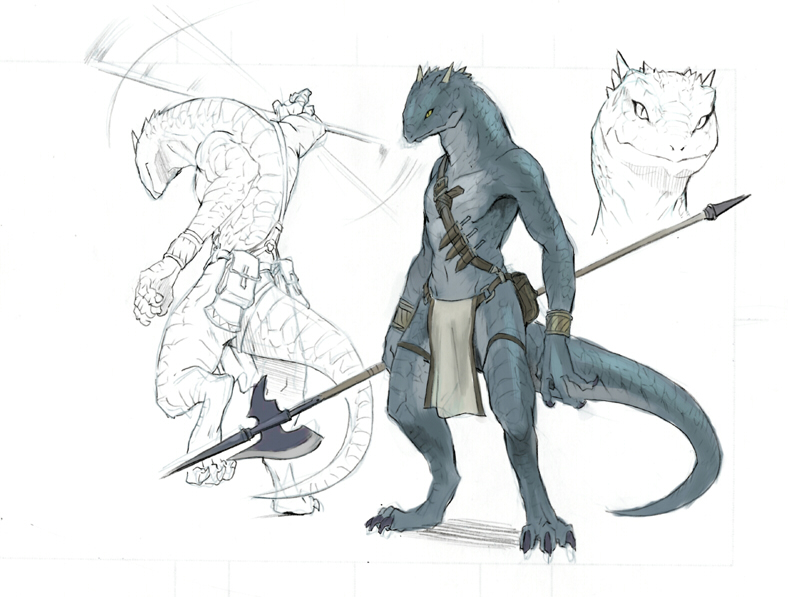
To make the task easier for Graey, I assembled a document of things I wanted to see in my new race of lizard people.  I had seen a few years ago a piece of art on Deviant Art by another artist, koutanagamori, called "Lizard Man," that served as the chief inspiration for my own lizard man.  It showed a creature with digitigrade feet, a prehensile tail, an arched neck and a pointed snout, and some horns or spines coming out of the rear of the skull, and wielded a pole-arm, with sketches of the character expressing different emotions or movements in the background.  I knew that this was close to what I wanted, but needed my characters to still be different.  And that difference was to make take them from just being a somewhat standard lizard people, to having some more draconic (dragon-like) and dinosaur-like traits.  

Lizard Man by koutanagamori @ DeviantArt.com

With that in mind, I used the physiology of the "Lizard Man" character to describe the basic body of my own lizardfolk, I went on to explain the features I wanted my race to have.  I proceeded to research lizards, reptiles, and even dinosaurs for traits that I wanted to appropriate for my race, then use pictures of the lizard/reptile/dinosaur to give the artist a visual rather than verbal explanation.  The first specimen I found is a lizard that takes it's name from the terrible antagonist of Tolkien's "The Hobbit," Smaug!

The Smaug lizard, Smaug giganteus,
aka the sungazer, giant girdled lizard or giant dragon lizard.

Clearly a reptile after my own heart, the sungazer was a natural choice to be used as inspiration for my own creation, and I choose the horn-like protrusions on the back of his head, and the texture of his scales, to add to my lizardfolk.  Now, these features are more prominent in my main character than in other characters featured in the book, due to their being multiple sub-races (some with horns and some without, for instance), but still carried over to the general flavor of the people.  From here, I had to find features for the lizardfolk my main character interacts with through the majority of the story, which are the lizardfolk without horns.  These characters, though part of the same race, had some slightly smoother features when compared to the sungazer, so I choose another lizard friend that I'm pretty sure the internet loves.

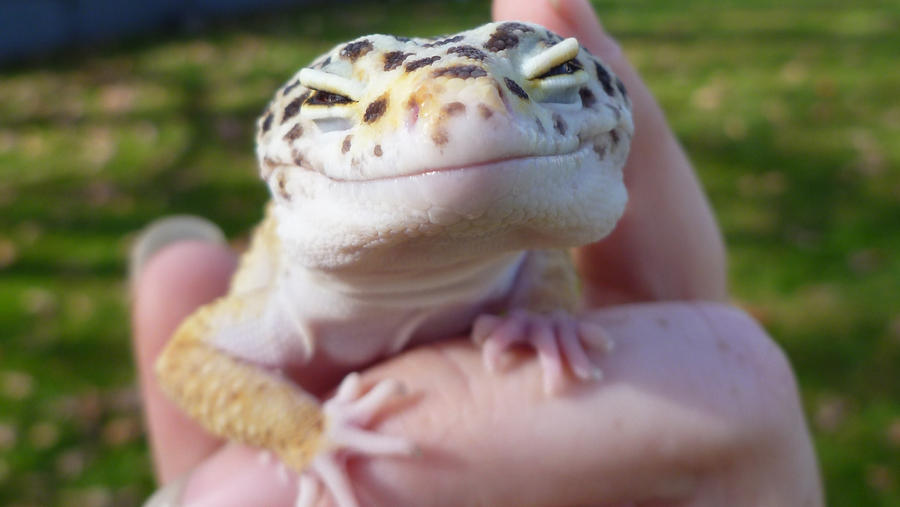
The face of a happy lizard.  Or one about to steal your crickets.
Thank you, TheLioness24 @ DeviantArt.com, for your
beautiful gecko picture!

If ever there was a friendly (looking) lizard in the world, it's the leopard gecko.  So I wanted to incorporate them into my own lizard people.  Their 'trademark' grin and skull shape along with the eye placement made them seem an ideal candidate for my needs.  They even looked similar to koutanagamori's own lizard man that they seemed to be meant to be - um - appropriated.  

But how was I supposed to say it, Ariel!

The final piece of the puzzle was the clothes, and for that I moved away from lizards and towards native peoples.  Inparticular, I focused on the Cherokee and Iroquois for inspiration, being peoples I was familiar with and lived in a region similar to where the story begins.  Since most native peoples wore leather, the most basic material I suggested Graey to think of was such, while also suggesting that fur might make sense to include in a temperate climate like that of the north-eastern part of the United States of America (where I live).  Flaxen linens were not unheard of in other native cultures, so that was suggested as well. Also, I gave suggestions on motifs and symbols that may find their way into their clothing, since these people revere fire and light.  Ultimately, Graey took all of my notes and suggestions and produced the follow pieces of art, in order.  As a quick note, I have to point out that his first version of my lizard folk was so spot on that I was immediately in love with them, and couldn't wait to get my main character finished.

The first piece of work Graey sent me, and I was in love.  Here we have my main character, #1, an average male, #2, and an average female, #3, with crest variations.
Concept © Shane Press.
Here we worked out the colors.  The females of this race have feathers as their attractive features, and the crests and colors vary according to genetics.
Concept © Shane Press.
Here we are working out the pose for the final image.  We did this after designing the sword, which will be discussed in a separate blog post.
Concept © Shane Press.
Here Graey working on an idea I had of putting an action shot behind the fully colored finished piece.  We settled on a pose where the main character is admiring the sword.
Concept © Shane Press.
The first pass when designing the clothing.  The finished piece took parts of both and worked them together, though each was good enough to be left alone on another character.
 Concept © Shane Press.
And the original final piece.  Note the shot in the background.
This was such an amazing experience getting this in my inbox.
Concept and Design © Shane Press.

I have to thank Graey Erb again for the fantastic work he did on this project.  If it wasn't for his patience and hard work, I would not have such a great piece of art to draw inspiration from when writing.  This artwork, all of it, makes writing so much easier when I can just reference them to help describe my characters.  Please take a moment to check out his work at www.graeyerbillustration.com.  And thanks for reading!

Sunday, October 25, 2015

The Weekender: A realization while playing Halo

Halo: Revelations!

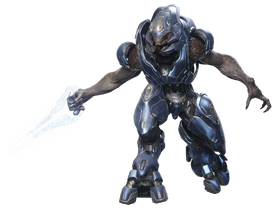
So, a few days ago I posted about Halo, and why I love it.  Well, I know more about why I love it while playing it this weekend in order to get myself in the groove to play Halo 5 on Tuesday:  I love it because of the Sangheili!  

The Elite of the Covenant, the Sangheili!

"So what, Shane?  They're ali-"  They are lizard people!  And they both prove my original point about lizard people in popular media, and resist it (in a limited sense as of Halo 4).  In the original Halo, they are only referred to as Elites, and they are the ... elite... soldiers of the alien hegemony called the Covenant, which makes them the bad guys.  They are the military leaders of their armed forces, and are generally armed with a special energy sword or a plasma rifle.  Now, in Halo 2, we are introduced to the Arbiter.

Thel 'Vadam, the Arbiter,
and Redeemer of Lizard People Everywhere 

The Arbiter was the Commander of the Fleet of Particular Justice, which means every single one of the baddies in Halo: Combat Evolved.  Having failed to kill the Hero, Master Chief, he's disgraced by the leaders of the Covenant and forced to become the Arbiter, a commando meant to die on a suicide mission for the glory of the Covenant.  And guess what?  You get to play as him as he tries to redeem himself.  Well, a spoiler alert later (come on, it's been like 10 years), the Arbiter realized the Covies are crazy genocidal maniacs and the Sangheili become good guys!  (For now.)  In Halo 3, still good guys, they help you finish off the Covenant, and if you played the 4 person Xbox-Live Co-Op, Chief is joined by the Arbiter and two other elites to kick more alien butt.

Then comes Halo 4, and guess who's back to being baddies?  If you guessed anyone besides the Sangheili, you were wrong.  Sorry, I know.  Moving on.

So to my point:  More of why I love Halo!  In my experience, (which I admit may be quite limited), this is probably one of the only times outside of a tabletop RPG, an MMO, or an Elder Scrolls game that you get to play as a non-humanoid/demi-human (such as orcs, dwarves, elves, etc).  And not only that, they get a truly fleshed out culture that reminds me of samurai ruled Japan, with clans and a caste system.  No swamp dwelling, bone wearing, warm-blood deathing lizard people.  Okay, maybe they're still screaming for the death of human at first but the lore of the Halo Universe says that the Elites believed humans were worthy of respect for fighting against all odds for their existance, which is why the Sangheili eventually team up with the humans.  As of Halo 5, humans are helping the Arbiter end a civil war among the Elites.

SPARTAN Locke and Fireteam Osiris
storming Sangheilios to help the Arbiter

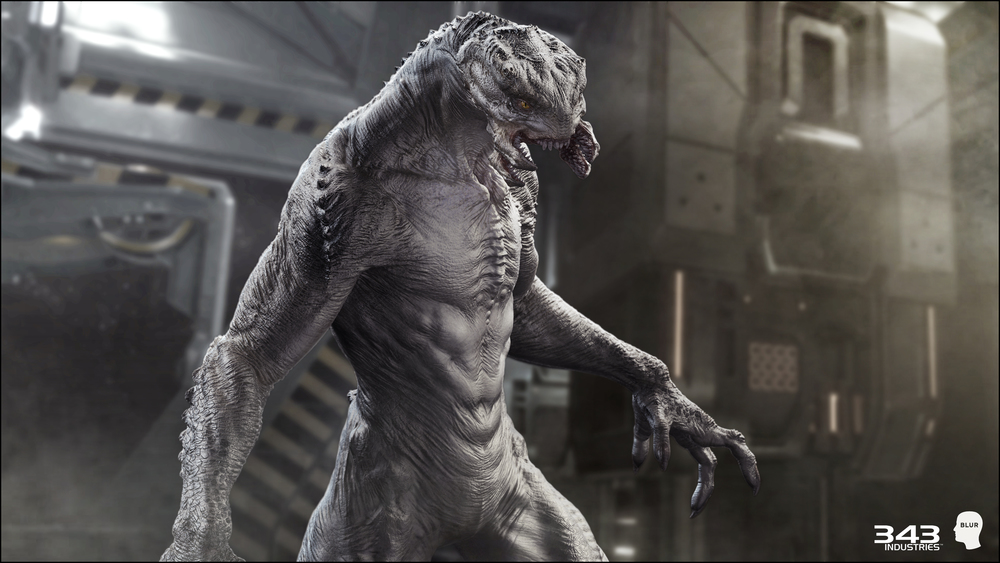
In relation to my book, the Sangheili probably informed the way I wanted my lizard people to look, as well as the way I want them to act.  I've always been fascinated with samurai, and the Elites are lizard-people-alien-space-samurai-complete-awesome-plasma-swords.  Anyway, here is a shot of a Sangheili (I think the Arbiter) without armor on.

Notice the four-fingered hand?
I may discuss my design decisions for my people in-depth tomorrow!  So, there's my weekend edition of my blog.  Going forward, I plan to write one Weekender sometimes Saturday or Sunday, and then one per weekday (provided I'm not too busy, and not on major holidays).  So thanks for reading.  And as always, "No politics, I promise!"

Tuesday, October 20, 2015

About my Book

The Pathkeeper Chronicles

So you may have asked, after reading the first post, "So Shane, what exactly is your book about?"  The simple answer is:


My Lizard People.
Art by Graey Erb.  Copyright Shane Press 2015

And now you may be wondering, "Why lizard people?"  Let's go way back into my past to answer that question.

So I grew up in the 90's, and if there was one thing I loved as a child it was dinosaurs.  Jurassic Park came out in 1993 when I was five years old, and seeing that T-rex roar as it came out from behind the electric fence during the storm was mind blowing.  Even before then, I would watch anything I could about Dinosaurs, including a Walter Cronkite hosted A&E special called "Dinosaur!" which I probably watched so many times that I'm surprised the VHS tape didn't snap.  (Leave a comment if you ever watched a VHS tape over and over again...)

Also as a child, I spent a lot of time out doors, specifically in the small city of Oneonta, in upstate New York, USA.  Mostly rural, the mountain my grandfather built a house on as a family retreat was where I met these cute little lovelies.

The red eft, or red-spotted newt

These little guys were always underfoot in the late afternoon, coming out to search for bugs and enjoy the moist warmth of rotting logs.  I would collect that and feed them ants and then let them go again to find the next time I would visit.

That said, as I grew older, my dinosaur fascination turned into a Godzilla fascination (Or Gojira for the purists).  A giant radioactive dinosaurian monster that fights other monsters (and occasionally levels cities) was an instant favorite of mine, especially since I was completely naive to the allegorical underpinnings involving Japan's sad history with atomic energy.  But that's for another blog.  I was hooked.

So what else is huge, levels cities, and breaths fire?

Dragons!

And you would think for a fan of fantasy that the dragon would be the apex of awesomeness, right?  Well, you would be right to think so.  They don't call it "Dungeons & Dragons" for no reason.  Before Gygax and Tolkien, story tellers throughout history have held the dragon (and there various cross-cultural equivalents) as the apex of power.  There is an entire Wikipedia page dedicated to the various draconic beings across the world.

Now I'm not the first to decide that lizard people should exist.  Ignoring myths and legends, D&D, The Elder Scrolls, Dragonlance, the classic Warhammer, and many other games and novels have decided that lizard people should exist!  But more often than not they turn out to be enemies (the lizardfolk in D&D), or enslaved (the Argonians in much of The Elder Scrolls Lore).  On top of that, when they aren't evil or antagonistic, they seem to be consistently portrayed as swamp dwelling tribals (often in a Mayincatec fashion) that scream, "Death to the warm-bloods!"

The D&D Lizardfolk

Now, those are some sweeping generalizations I made.  A website I enjoy visiting, TvTropes.org, has numerous articles on the subject ranging from a synopsis of the common tropes to an explanation of why they are so often villainized.  And I recognize that these tropes get challenged sometimes.  The Elder Scrolls games let you play as Argonians.  Dungeons & Dragons has made so many types of lizard people (some of draconic origin) as both NPCS (non-player character) and PC (player character) templates that you be almost anything with scales with the right Dungeon Master.  But I challenge anyone who reads this to point to me a book that has any form of scaly humanoid as the principle protagonist, and not some sort of side kick.  Elves, Dwarves, Hobbits, and predominantly Humans feature more often than lizard folk.  Even anthropomorphic animals get more prominent roles than our scaly friends.  Ever read Redwall?  A Narnia novel?  An Aesop fable?

So, being the dino/dragon/amphibi-reptile lover that I was, I declared that I would tackle the glaring absence of non-human like protagonists in literature that I believe exists with my book.  And by embracing some tropes common to them and fighting against others, I slowly devised a race of beings that I thought would make a fine contender as the "next big thing" in literature.  Or at least something I had fun writing about.  My lizard people (I will reserve revealing the name of the race for now until my book comes out) have varying cultures and numerous civilizations within my world.  In the beginning of my book I showcase a tribal culture, to root the book in some of the recognizable aspects attributed to lizardfolk in literature and games.  But the story leads the protagonist and his allies to European style city, a Japanese/Mongolian themed nomadic culture, and beyond.  I wanted to make them as varied as humans.

Which brings up the last thing I'll write about in today's blog, the dreaded question I've been asked several times by different alpha-readers whom I showed my early work to in college:  "Why don't you just make them human?"


As I mentioned, lizardfolk don't get top billing unless they happen to be 500 stories tall and named after a Japanese legend (I'm looking at you Gojira).  So while my lizard people may act like humans, talk like humans, wear clothes and use tools like humans, and even have interpersonal relationships like humans, I will never, ever, for any reason, make my characters human.  Maybe it's because I don't see the point when the internet is full of anthro-dogs, -cats, -rats, -dragons, etc.  So why not some lizard folk headlining a novel?  I mean wouldn't this guy look good on a cover?
Meet the main character, somewhere in the middle of the novel!
Art by Graey Erb.  Copyright Shane Press 2015.