Showing posts with label pathkeepers. Show all posts

Sunday, November 15, 2015

World Building, Part 6: The Sword!

Because Heroes Prefer Swords

My own sketches, pre-Graey Erb
This is not news.  A trope older than Beowulf and Iliad, literature both ancient and modern is full of examples that prove the trope.  Some ask why, and the simple answer is that a blade has been present in warfare for almost as long as war has been waged (considering someone had to figure out how to make them, first).  Even today soldiers bring a knife to their gunfights, and while there are no longer epic sword fights outside of Medieval Times and Renaissance Fairs, swords remain strongly embedded in how we think of war.  Therefore, it is natural that in fantasy settings, swords seems to always find their way into the hands of a hero.  The above link goes into some detail regarding examples in literature, and literary trends related to it, so instead I will tell you about The Sword of my book, and why I found it necessary to design this particular aspect of the book and bring it to life through art so early in my writing process.


My pommel design sketch.
Before I hired Graey Erb to create artwork, I tried my hand at drawing things myself.  Above I was toying with the shape of the blade.  I was inspired by the design of Orcrist from "The Hobbit" movies (shown on the right).  Big surprise, I'm sure.  Truth is at the beginning, I imagined The Sword for my protagonist would be like Anduril, considering my unrefined excitement for "The Lord of the Rings."  Further thought and time eventually told me that a European long sword seemed out of place among lizard folk.  It is much more common to find lizard folk or any of the other 'evil minion' labeled races having some manner of cruelly shaped curved swords.  This comes from history as much as literature, as European Christians demonized the pagan tribal peoples of Eastern Europe and the Muslims of the Near East, both of whom of battled various European kingdoms either across land or the Mediterranean Sea (Crusades, anyone?).  These cultures used curved blades that fit their tendency to attack from horse back, where a curved blade would be more practical than the straight edged blades that dominated Western Europe's armories.  This allowed me to tackle and subvert another common trope, referred to as the Sinister Scimitar.  In essence, my desire to subvert the "Reptiles are Abhorrent," which claims that lizard-beings are almost always evil, gives me the chance to subvert the trope claiming bad guys use curved swords.

Curved swords!
The first draft of Graey Erb sword concepts.
In order to create a fitting visualization of the sword I wanted, I emailed Graey (after discovering his art on Pinterest of all places) with a 20+ page project proposal that included my own sketches for designing the sword.  The first draft of concepts were very different from each other, as I did not have a clear idea of what the sword would look like.  The initial idea was that the sword was created during a Golden Age of the World.  Since the Deities of this world have (or can choose to have) a draconic form, the weapons are made to evoke that.  The pommel is shaped as the head of a dragon, the hilt is the neck/body, the crossguard the wings, and the blade has a tail either engraved or embossed upon it in some fashion.  After seeing the first draft, I pointed out what I liked and disliked, and Graey went back to work, creating a second set of concepts.  The one I liked the most, and that Graey iterated upon, was a combination of features from #1 (The pommel, crossguard and blade shape) and from #3 (the hilt texture and the style of detail on the blade).  I also asked him to work on the proportions of sword, such as making the blade longer and thinner.  The other designs, despite not being quite what I had in mind, actually gave me some ideas.  Numbers 5,6 and 10, with the angular design elements reminded me of the dwarven architecture in "The Lord of the Rings" and "The Hobbit" movies, so it gave me the idea that these designs could be reused when I get around to developing the other cultures that will be in my book.

Concept Pass 2
The second set of concepts nailed down the size and shape of the sword, leaving the details on the blade itself to be choose.  I again went with #1, as the sunburst at the top seemed appropriate. It seemed too plain, still, so Graey and I came up with a stylized sun to replace the plain circle.  It ended up being two pointed starbursts overlapping each other  Next, something needed to go on between the lines radiating from the half circle.  We narrowed it down to either a diamond or a four pointed star, and settled on the four pointed star.  From there the sword was more or less complete.  With some color, the sword came to life.  There is one feature that I found unique which came from the original concepts: a medallion hanging off the pommel.  It is common among the practitioners of Wushu, a style of the 'kung fu' martial arts in China, to have a tassel hanging from the pommel of their dao, a type of broad bladed sword.  I like it as a way that my character, upon getting the sword, to personalize it without changing the sword itself.  A common trope in fantasy is the named weapon, which either comes from the blade being historical/legendary or from the character being sentimentally attached to the weapon.  I have not decided yet if I will name it or how it would be named, so the medallion seemed a good alternative.

Final Concept Pass
The Sword of the Hero!

Thursday, November 5, 2015

Things that Inspire, Part 1: Long Live the King!


Large and In Charge

Many things inspire my writing. Chief among those is "The Lord of the Rings," which I've mentioned many times, but even more so, specific things in "The Lord of the Rings" inspired specific things in my novel. For instance, my main character. In my earliest drafts, my Protagonist was inspired by my favorite character in TLotR:  Strider, aka Aragorn, son of Arathorn, heir to the throne of Gondor

Aragorn II Elessar, son of Arathorn, King of the Reunited Kingdoms of Arnor and Gondor, and all around bad ass. Early on, my main character was almost a rip off of the movie adaptions' version of Aragorn: ratty clothes, soiled leathers, elven hunting knife, born of some special legacy, gets "The Sword" and becomes "The Hero." I won't use that 'C' word but, yeah. I was a teenager and that was what I liked. Not much has changed but my character has, for the most part.

Apart from the tropes I liked, the character also appealed to me because of how the actor, Viggo Mortensen, portrayed Aragorn. In the novel, Aragorn is a character who knows that he is the heir to a kingdom and a mighty legacy, but he tends to make sure everyone knows it, too. He leaves Rivendell with the Sword of the King (unlike in the movie) and basically lets anyone who doubts him because of his vagabond appearance just who he is and why that sword he's carrying shines with the light of the sun and moon. Some quick literary analysis: Tolkien based Aragorn on the heroes of myth and legend from Northern Europe, such as Beowulf. Beowulf, if you read the translations of the surviving manuscript, is pretty much that guy who knows he's the best there is and decides, "Yeah, I can kill that beast Grendel unarmed and naked." And then does it. Then takes the next step and kills Grendel's mother. And then a Dragon. Solo. While no one-on-one monster slaying is done by Aragorn in the Lord of the Rings books, he does have some suitably heroic encounters. He faces off with all nine Ringwraiths, some of the most deadly fiends in Middle Earth, with nothing more than a mundane sword and a torch in the Fellowship of the Ring.

In the movies, however, Aragorn is portrayed as a reluctant hero. He still knows that he is the heir to a great legacy and the elves can't wait to remake that awesome sword so he can go save the world with it, but chooses a humble and honorable life as a ranger to protect those in need, fearful of the corrupting influence of power. It was that version of Aragorn, the hero that's heroic only because duty calls and would rather just be left in peace, that inspired my character. In my story, the protagonist just wanted to be a respected hunter in his village, but an encounter with an ancient plague and a need for someone to do something about it (and a dash of certain people not liking him) ends up propelling him along the heroic story arc. I don't want to spoil anything, so I won't go on any further about the plot. The other part of the character of Aragorn that inspired my own character wasn't so much something specific to Aragorn, but it's something common to the archetype Aragorn represents: The Hero. And in myths and legends, the Hero almost always has The Sword. I mentioned a few times already that Aragorn gets "The Sword" for his particular book. That sword is Anduril, the Flame of the West, forged from the shards of Narsil! Basically it's the weapon that the Bad Guy even fears because it can hurt him. Common trope. And teenage-me loved it. Get the awesome sword, be the awesome hero. Simple formula. Works just about every time. From Luke Skywalker to Eragon to Bilbo to Arthur. Getting "The Sword" means you're "The Hero," and so it shall remain for my book. Nothing new, I know, but hopefully the context within the book itself will make it better. That tends to be how these tropes work. It's not the trope itself but how it's used which makes a book unique. Again, won't divulge much, but you will see "The Sword" of my book soon. It's pretty cool.

NaNoWriMo update: Another busy day as you can tell by the late posting, but productive. Chapter 7 is under way with another 261 words typed, totaling 1277 words so far. I'm pretty sure I will get this one done this month. I have it planned out almost from start to finish, so just need to add the details. But you know what they say: The devil is in the details. Wish me luck!

Quick note:  This had pictures in it but Blogger must have messed up the html somehow, so I removed them until I can fix them.

Monday, November 2, 2015

National Novel Writing Month

NaNoWriMo

AKA "Write.  Your.  Book!"

Hello readers!  Happy NaNoWriMo!  November is the time of the year where both veteran and novice writers can set a goal for themselves:  Write their d@mn book!  Or more accurately, write a 50,000 word novel in 30 days.  On top of that, there is an organization dedicated to this endeavor that offers a place for writers to post their work as well as offering tools, advice, and even encouragement to keep writing.  In order to write 50,000 words in 30 days, you have to write an average of 1667 words a day.  That's a lot, to be honest, however, it is a lot to think about.  On a good day, I could blast that out and be happy with it.  But for 30 consecutive days?  Without getting caught in Revision Hell?  Without writers block or an idea not developing properly?  Hence the support structure.

Perosnally, I know I can't write a 50,000 word novel in a month because I haven't even written 50,000 words in 12 years!  I am however, keeping track this month.  So far I have written 308, all of which come from today.  We will see how far I get by November 30, but my goals are as follows:


  1. Write as much as possible.  Not a specific goal but still something I need to have as a goal because "Write as little has possible" as been my goal for a while and its not helping me write!
  2. Finish chapter 6 for Tolkien's Sake!  I've had my sixth chapter staring at me for over a month or two and it's driving me crazy!  It's also a terrible reminder that I write too slow, so, "Finish It!"
  3. Start chapter 7 and  also finish it!  Fingers crossed!
  4. Start chapter 8, bonus points for finishing.
  5. Write as much as possible.  Just so it sinks in.
I will probably compell myself to write more after posting this, but I will keep the total words typed count running all month.  I hope it gets close to 50,000!


For more about National Novel Writing Month, click the links below, and Happy Reading and Writing!
Link to the NaNoWriMo Facebook Page: https://www.facebook.com/nanowrimo/
Link to the NaNoWriMo Home Page:  https://www.nanowrimo.org/


Friday, October 30, 2015

World Building, Part 5: History

World Building

Artificial Historical Artifacts

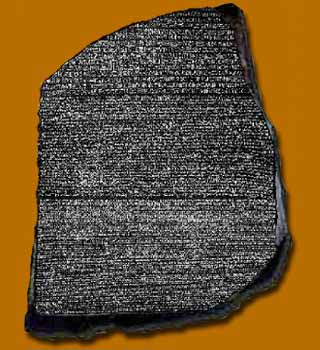
Ever heard of Excalibur?  Durandal?  Patton's Ivory-handled Pistols?  What about the Rosetta Stone?  The Liberty Bell?  The Magna Carta?  These are examples historical artifacts and ancient wonders that give backstory to our world.  History both tangible and lost that shaped culture and events; a few the stuff of legends.  Now while works of fiction are planned and constructed, as opposed to seemingly random chance, these things all influenced the world at some point, and the fact that some of these things are still present in modern culture shows how much wonder and awe they inspired.  


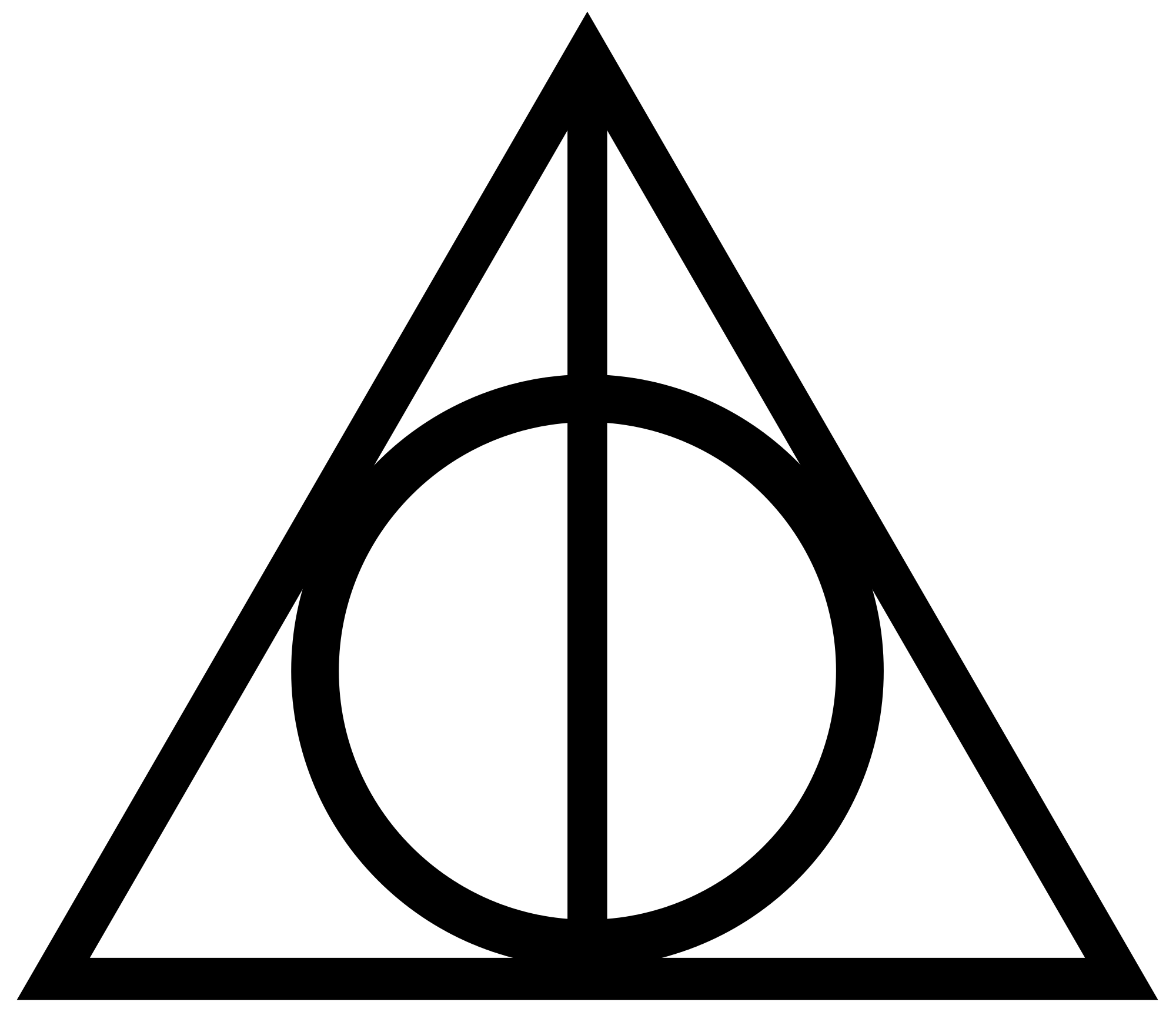
The same principle applies to fictional worlds.  Without backstory, without history, we are left without context for the events of the story.  What would "Harry Potter" be if Hogwarts was a brand new wizard school without the secrets and mysteries that fill the halls?  What if the Deathly Hallows didn't exist?  If the fear that still existed after Voldemort's defeat (the first time) was absent?  It would be a very meaningless story about a wizard whose parents never died, who never had to outsmart the most terrible wizard ever to exist, and the books would be about mundane concerns that really don't seem that compelling.  Imagine "The Lord of the Rings" without the Rings.  Why would Frodo leave the Shire?  To buy groceries?  Gandalf would be pretty bored, that's for sure.  And if Morgoth and Angmar and all the other things that gave the novel its scope were absent, why would we care about these diminutive hobbits?  My point is: everything I discussed this week relates to a world's history.  The races, the cultures, the language, the mythology, all make the history and are made by the history.  

The Symbol of the Deathly Hallows

In fantasy, artifacts tend to usually be the goal of a quest, or needed to defeat an evil power.  Sometimes they do things that no one can explain, and others do things no one has a use for.  For my book, artifacts were one of the first things I thought about when first creating the world, and considering my age at the time most of them were weapons.  This has a lot to do with the numerous 'artifact weapons,' such as Glamdring, Orcrist, and Narsil, that have histories going as far back as the first great wars of the worlds history (many thousands of years old in most cases).  The only other artifact I came up with in my original drafts was something I called "the Omnicron," a stone that had undetermined power.  It was the goal of both the Hero and the Big Bad to get it before the other in order to accomplish their respective goals (killing each other, basically).  But I found that initial idea too simple (and way too over used in the genre).  However, the idea was morphed into something else, and is still the focus of the plot, but its origins and its purpose changed.  So maybe only changed superficially, but my beta readers have enjoyed "the orbs" in my work.  From there, other artifacts begin to take shape.

The next most important artifacts for my story are a collection of "Hero Weapons" for my protagonists.  A common trope in video games, Hero Weapons are usually something special that a hero uses in battle, and one of the most famous in literature is Excalibur.  Not to be confused with the king-maker Sword in the Stone, Excalibur was a sword wielded by Arthur and made him unbeatable in battle (until someone inevitably betrays him).  For my heroes, we have a sword, staff, a special arrow (not a bow), and a pair of daggers.  Who gets them, you'll have to read the story.  But I will let you all know about the Sword next week.  You've seen it already, and I look forward to explaining the process of how Graey Erb and I worked together to design it.  

Have a great weekend and a safe Halloween!  Look forward to a review of Halo 5 over the weekend.  Best wishes!

Thursday, October 29, 2015

World Building, Part 4: Culture

World Building

A starting point for Culture

A bit of a continuation from yesterday's post

Last time I mentioned how including numerous cultures in a work can add depth and variety that makes improves the work (or it could detract from the work if done poorly).  To add to my world, one of the first decisions I made when I ultimately began the project was that it would start in a forested valley 'somewhere' beyond the borders of the more civilized parts of the world.  While the valley once was the center of an ancient civilization, wars between both mortal and immortal beings left the valley abandoned except by the few who felt it was their duty to remain and protect what had been left behind, while the rest moved on.

The people that still lived among the ruins are part of a culture I referred to as 'the Faithful' because they had chose to remain in and protect the cities of their ancestors, while 'the Exiles' were the ones who moved on from the Valley and chose not to cling tightly to their past in order to accept a new future.  A third culture, that I refer to as 'the Forsaken,' were on the wrong side of the aforementioned wars, and were driven away by the victors.  The latter two cultures I will not be discussing this time, but that they come from the same origin culture is important.  The Faithful are the predominant culture in the valley save for one village of refugees from a Exile town that was integrated into the valley and has a mixed cultural identity.

The Valley.

The Faithful are called such for they were (and still are) the pious citizens of a civilization that revered a Sun God, among others, in a henotheistic/polytheistic manner.  When the god of Night, Sun's brother, decides he wants to be king of the hill, a terrible war rages across much of the world.  Now this isn't a spoiler (you learn about this in the first few chapters) but the Night God loses, and the Sun God vanishes, assumed to have died stopping the Big Bad Night God by trapping him 'in the Path between worlds.'  The war, however, left the valley a mess and a city in ruins and a whole lot of smaller settlements uninhabitable without the infrastructure maintained by said razed city.  So the Faithful go native and become a more simplistic culture, hunting and gathering, in order to protect what's left of their ancestral home.  But what if the Big Bad comes back?

That is where the group that gives us the title of my book comes from:  The Pathkeepers.  Tasked with watching for signs of the Big Bad's return, the Pathkeeper philosophy is the driving force behind the valley culture.  And they became the stuff of legends across the world as stories of their (sometimes alleged) deeds filled taverns around the world.  But in truth they were a simple people.

The valley culture is sustained by hunting local wildlife and harvesting as much edible flora as the valley can sustain.  Without the infrastructure of a large city or civilization, the level of technology is somewhat primitive in certain ways, such as clothing being all animal skins, and yet they can still make more refined things like flax linen and tools (when they have the resources).  They also do not keep themselves completely separate from the larger world, except to keep potential threats out of the ancestral lands.  Instead, members of the culture are encouraged to leave the valley to see the wider world.  Divided into separate villages overlooking different ruins, the culture differentiates between the village in the skills the village needs the most, such as one village exists floating on a lake, and spear-fishing and swimming are skills they value more then others in other villages like archery or hunting on foot with a spear.

I could go further into explaining the culture and the Pathkeepers but that feels like I'm spoiling learning these things along with the protagonist.  I will instead leave you with some early artwork from which the symbol for the Pathkeepers evolved from.  This was of course from Graey Erb, Earl_Graey on DeviantArt.  Be sure to check him out at www.GraeyErbIllustration.com, or on DeviantArt.com.  I'll write a post further explaining the evolution of the image some other time.  I don't want to spoil anything before the book is even finished being written!  Thanks for reading!


Wednesday, October 28, 2015

World Building, Part 3: Creating a Living World

World Building

A whole new [living] world!

A dazzling place I never knew.
Aladdin © Disney

Don't judge me.

Every great story has a great setting created by a great author.  JK Rowling created Hogwarts.  Tolkien created Middle Earth.  Terry Pratchett created Discworld.  Suzanne Collins created Panem.  Whether the setting is on an imagined world, tucked creatively within our real world, or is a dystopian version of our own, these great settings did not spring forth from the ether fully fleshed out and ready to have stories told about and within them.  For Tolkien, it was his life's work that created Arda and Middle-Earth.  Years of studying old languages, creating new ones, and writing (either poetry in the trenches of The Great War or the first lines of "The Hobbit" on the back of a student's exam) culminated in the fantasy realm that inspired so many others.  The same goes for most authors.  Each took their passions and their life experiences and used them to craft their world.  And these works become the experiences of others, which then shapes the world.  There's a reason D&D, Dragon Age, and EverQuest, to name a few, all involve elves, dwarves, wizards, and dragons.  His name is Tolkien.  JK Rowling will no doubt shape the future of how people think of magic, as games, music, and even plays take inspiration from The Wizarding World of Harry Potter TM.  Each author's world has become a place others love to dwell in.

Every author seeks to draw you into their setting one way or another.  A friend of mine, Robin Dilks, self-published a paranormal romance novel that takes place in both the historical past and the present, redefining the mythology of the Biblical character Lilith in "Rachael Awakened."  (Still reading it.  Review pending.)  I was drawn into how she mixed paranormal tropes like demons, werewolves, and vampires, with historical eras like renaissance Italy.  With mine, I hope to appeal to high fantasy readers looking for something a little different, by playing with the established genre enough to make things unique and fresh.

For my story, creating the world started by figuring out some of the mythology that would be present.  Since I was following Tolkien for inspiration, that started with deciding that there would be a pantheon of deities.  From there, I had to have some sort of explanation for their existence, as well as an explanation of where the physical world came from.  I'll save the specifics for now but I ended up going with something slightly more cosmic than creationist, meaning the deities did not necessary "create" the world the story takes place in.  Shaped it, sure, but they did not "sing it into existence" like Iluvatar and the Valar did at the very beginning of "The Silmarillion."

My next step was, silly as it sounds, finding conflict.  In Tolkien's mythology, Melkor is the Big Bad Dark Lord from Day: Zero, and I sincerely wanted to do something else.  While I still wanted to play with those two tropes, I did not want my work to come off as even a little cliche (even though it probably will anyway), so I choose to take a more Lovecraftian angle toward the the Big Bad, while saving the Dark Lord bit for something else.  But I won't say more.  You'll have to read my book!

From there it was trying to decide what the world contained as far as sentients.  Most fantasy works, and especially science fiction works, have different kinds of mortal beings who interact and sometimes represent different thing.  Most times they are allegories for different real world states, religions, philosophies, or ethnicities.  "Redwall," a classic about a mouse who becomes a hero to save his little town, uses animals like mice, badgers, otters, and cats, to represent different kinds of people, with some being summarily bad (like evil rats opposed to the good mice).  Sometimes these allegorical pieces are intended and other times not, and only revealed through analysis.  I am doing some of this, but in a way where the individual cultures of my lizard people, and of any other sentients I include, will say more about what they represent then the being itself, while still letting the nature of certain beings influence that same representation.  If that sounds confusing:  You'll have to read my book!

And then it's identifying what sorts of cultures this world will have that comes next.  My story starts in a very tribal setting for a few reasons, it never stays there.  Just as LotR moves from the Hobbit filled Shire culture to the many Mannish cultures across Middle Earth (from Bree to Rohan to Gondor and back), so too will my story explore the world and its cultures.  That I think is one of the most important aspects of world building.  If you try to write a white washed world where Good here is Good there and everyone agrees that Good is Good, well it just doesn't reach the level a world that's complex and diverse.  What's Good in the protagonist's hometown might not be looked upon the same in a corrupt city where the only way to survive is to commit crimes.  That creates conflict, and conflict is what drives a story.

I wrote previously that I bounce back and forth between world building and actually writing the story.  I'm still not sure what would work best (for me or other people) but I have to say that without knowing enough about the places my characters are going, I can't write.  So if you're reading this for writing types, consider what works best for you, first, and then accept advice that you find helpful.  And always remember that if you think it will work and it doesn't, try something else.  Don't force it.  I never write well when I force it.  Thanks for reading. 

Tuesday, October 20, 2015

About my Book

The Pathkeeper Chronicles

So you may have asked, after reading the first post, "So Shane, what exactly is your book about?"  The simple answer is:


My Lizard People.
Art by Graey Erb.  Copyright Shane Press 2015

And now you may be wondering, "Why lizard people?"  Let's go way back into my past to answer that question.

So I grew up in the 90's, and if there was one thing I loved as a child it was dinosaurs.  Jurassic Park came out in 1993 when I was five years old, and seeing that T-rex roar as it came out from behind the electric fence during the storm was mind blowing.  Even before then, I would watch anything I could about Dinosaurs, including a Walter Cronkite hosted A&E special called "Dinosaur!" which I probably watched so many times that I'm surprised the VHS tape didn't snap.  (Leave a comment if you ever watched a VHS tape over and over again...)

Also as a child, I spent a lot of time out doors, specifically in the small city of Oneonta, in upstate New York, USA.  Mostly rural, the mountain my grandfather built a house on as a family retreat was where I met these cute little lovelies.

The red eft, or red-spotted newt

These little guys were always underfoot in the late afternoon, coming out to search for bugs and enjoy the moist warmth of rotting logs.  I would collect that and feed them ants and then let them go again to find the next time I would visit.

That said, as I grew older, my dinosaur fascination turned into a Godzilla fascination (Or Gojira for the purists).  A giant radioactive dinosaurian monster that fights other monsters (and occasionally levels cities) was an instant favorite of mine, especially since I was completely naive to the allegorical underpinnings involving Japan's sad history with atomic energy.  But that's for another blog.  I was hooked.

So what else is huge, levels cities, and breaths fire?

Dragons!

And you would think for a fan of fantasy that the dragon would be the apex of awesomeness, right?  Well, you would be right to think so.  They don't call it "Dungeons & Dragons" for no reason.  Before Gygax and Tolkien, story tellers throughout history have held the dragon (and there various cross-cultural equivalents) as the apex of power.  There is an entire Wikipedia page dedicated to the various draconic beings across the world.

Now I'm not the first to decide that lizard people should exist.  Ignoring myths and legends, D&D, The Elder Scrolls, Dragonlance, the classic Warhammer, and many other games and novels have decided that lizard people should exist!  But more often than not they turn out to be enemies (the lizardfolk in D&D), or enslaved (the Argonians in much of The Elder Scrolls Lore).  On top of that, when they aren't evil or antagonistic, they seem to be consistently portrayed as swamp dwelling tribals (often in a Mayincatec fashion) that scream, "Death to the warm-bloods!"

The D&D Lizardfolk

Now, those are some sweeping generalizations I made.  A website I enjoy visiting, TvTropes.org, has numerous articles on the subject ranging from a synopsis of the common tropes to an explanation of why they are so often villainized.  And I recognize that these tropes get challenged sometimes.  The Elder Scrolls games let you play as Argonians.  Dungeons & Dragons has made so many types of lizard people (some of draconic origin) as both NPCS (non-player character) and PC (player character) templates that you be almost anything with scales with the right Dungeon Master.  But I challenge anyone who reads this to point to me a book that has any form of scaly humanoid as the principle protagonist, and not some sort of side kick.  Elves, Dwarves, Hobbits, and predominantly Humans feature more often than lizard folk.  Even anthropomorphic animals get more prominent roles than our scaly friends.  Ever read Redwall?  A Narnia novel?  An Aesop fable?

So, being the dino/dragon/amphibi-reptile lover that I was, I declared that I would tackle the glaring absence of non-human like protagonists in literature that I believe exists with my book.  And by embracing some tropes common to them and fighting against others, I slowly devised a race of beings that I thought would make a fine contender as the "next big thing" in literature.  Or at least something I had fun writing about.  My lizard people (I will reserve revealing the name of the race for now until my book comes out) have varying cultures and numerous civilizations within my world.  In the beginning of my book I showcase a tribal culture, to root the book in some of the recognizable aspects attributed to lizardfolk in literature and games.  But the story leads the protagonist and his allies to European style city, a Japanese/Mongolian themed nomadic culture, and beyond.  I wanted to make them as varied as humans.

Which brings up the last thing I'll write about in today's blog, the dreaded question I've been asked several times by different alpha-readers whom I showed my early work to in college:  "Why don't you just make them human?"


As I mentioned, lizardfolk don't get top billing unless they happen to be 500 stories tall and named after a Japanese legend (I'm looking at you Gojira).  So while my lizard people may act like humans, talk like humans, wear clothes and use tools like humans, and even have interpersonal relationships like humans, I will never, ever, for any reason, make my characters human.  Maybe it's because I don't see the point when the internet is full of anthro-dogs, -cats, -rats, -dragons, etc.  So why not some lizard folk headlining a novel?  I mean wouldn't this guy look good on a cover?
Meet the main character, somewhere in the middle of the novel!
Art by Graey Erb.  Copyright Shane Press 2015.

Monday, October 19, 2015

Welcome to the Draconic Author's Blog

Welcome to my blog!

Greetings!  My name is Shane Press.  In 2000, I was introduced to a novel known to many around the world as "The Hobbit." Handed to me by my mother one day while I sat in a chair watching TV, I was quickly drawn into a colorful world filled with orcs, goblins, dwarves, wizards, dragons, and of course hobbits.  Unsatiated by the adventures of Bilbo Baggins and Thorin Oakenshield, I quickly dove into "The Lord of the Rings," and followed Bilbo's nephew Frodo on his own, far more epic and dangerous adventure, to save the world from the Dark Lord Sauron by destroying the treacherous One Ring.  And then, on December 19, 2001, something happened that would change my life forever.

When I first saw "The Lord of the Rings: The Fellowship of the Ring" I was blown away by the music, the costumes, the weapons, the scope, and the sheer genius of the production.  The classic novel I read and the daydreams of fighting in Helm's Deep and on the walls of Minas Tirith were brought to life by the performances of Viggo Mortensen, Elijah Wood, Sir Ian McKellen, and so many others.  And in the two following years as I got to watch "The Two Towers" and "The Return of the King" I came to realize I had to do one thing:  I had to write my own epic fantasy.  In the years since, I have been slowly working through my own novel.  The earliest iterations have evolved from a simple plot-clone of Tolkien's fantastic work to a developed coming-of-age tale.

I am currently 78 pages into writing the novel's most current and stable iteration.  Whether it was good or not, from 2006 to 2013, I wrote very little due to my time at Rutgers University for my undergraduate work and at Kean University doing post-baccalaureate work.  To compound the difficulties I had writing during my university career, I suffer from the constant desire to revise and edit things I've already written instead of just writing!  However, I was lucky to be able to take some Creative Writing classes at Ocean County College in 2014 and early 2015 where I finally found my stride, and the disparate threads of my story finally began to be weaved together into their current form.  So now as I slowly march forward, struggling with the urge to revise and the other constant distractions of life (I like video games too much), I look forward to sharing the story with the world.

So I hope to occasionally post some snippets of the book here, as well as some conceptual art I had commissioned to assist me in solidifying certain aspects of my characters and important objects in the story's world.  But I will close this post out with a piece of art:  An amulet that once belonged to an ancient organization devoted to protecting their world from an evil more ancient than the Gods that enlisted them.  They also give us the working title of my novel.  They are The Pathkeepers, and the newest member of their ranks may prove to be the only being that can prevent disaster.

An amulet that once belonged to a Pathkeeper, showing the sun motif, the runic motto of the Pathkeepers, the purifying flames, and the central labyrinth (the Path) that they guard.
 Art by Graey Erb for Shane Press, Copyright 2015.